


This feature sees Dr Fleur Muirhead in conversation with women’s health leaders in a broad range of leadership positions. We hope you find this an interesting and inspiring read.
Introducing Dr Samantha Scherman
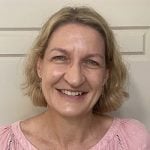
Dr Samantha Scherman is a senior O&G consultant at Cairns Hospital in Far North Queensland. Her current role includes the provision of obstetric and gynaecology services, teaching and supervision of junior medical staff, and outreach clinics to rural and remote communities, including Thursday Island, Mareeba and Innisfail Hospitals. Dr Scherman previously served as Head of Department at Cairns Hospital O&G Department before stepping back into a more clinical role in 2024.
Can you share what inspired you to pursue a career in obstetrics and gynaecology, and what led you to settle in Cairns?
I knew I was destined to become an obstetrician/gynaecologist (O&G) when I passed my O&G subject at medical school with flying colours. I enjoyed many different terms that I did as a resident, but O&G was the only specialty that I could see myself doing for the rest of my career.
I was allocated to Cairns as a fourth-year registrar for my rural rotation as part of the Queensland ITP. I was excited to come to Cairns, as I had previously lived in Weipa on the Cape York Peninsula for three years whilst at school.
I ended up doing both my fourth and fifth years of training at the Cairns Base Hospital, I really enjoyed the work — and living in Cairns. When I was offered a staff specialist position during my final year of training, I accepted immediately, and have been working here ever since.
Cairns Hospital is a fantastic place to work. Many of the staff are like my second family. Everyone I work with has a genuine desire to better the outcomes for the patients that they care for. And Cairns is a great place to live – beautiful beaches (though obviously with the caveat of the creatures that can sting and eat you that live in the water!), rainforests and waterfalls nearby, the stunning Great Barrier Reef, and quality restaurants and entertainment venues.
What are the key achievements you’re proud of and some of the challenges faced as a regional head of department and the key achievements you’re most proud of?
The biggest challenge when I first stepped into the Head of Department role was learning how to lead whilst on the job. I remember my first day as Director, I sat at my desk wondering exactly what I was supposed to be doing! I’m pleased to see that RANZCOG now offers leadership training for trainees and new Fellows who are interested in leadership roles.
Another significant challenge was learning how to be a source of advice, information and sometimes conciliation for the rural birthing sites for which Cairns is the referral centre. It was sometimes a balance — recognising the skills of the rural generalist obstetricians running those units, while also knowing when and how to advise on care when needed.
My proudest achievement as Director, alongside my senior midwifery colleagues, was fostering a collaborative, team based, culture within the Cairns unit. I’m proud of the strong, respectful relationships that exist between our midwifery and medical staff, among the consultant team, and our registrars, PHOs and residents within the unit.
As anyone working in O&G knows, it can be a stressful working space at times, and it is often the team around you that gets you through the tough times.
One of the most rewarding aspects of working in a unit that trains rural generalists, is seeing how many of them choose to stay in the region. I’m continually impressed by how skilled these doctors are across so many areas of medicine — not just O&G.
You undertake outreach clinics across FNQ and the Torres Strait, what role do these clinics play in improving outcomes and equity for women and what are the unique needs and strengths of these rural and remote communities you work in?
The outreach O&G service from the Cairns unit has been running for over 30 years and has expanded over that time. We now visit five sites within the Cairns and Hinterland Hospital and Health Service (CHHHS) and seven sites in the Cape and Torres regions. To be honest, I believe the service benefits not only the women in those communities, but also our staff.
We prioritise continuity of care, with the same two to three consultants typically responsible for attending Far North Regional Obstetric and Gynaecological Services in each community. Each consultant is accompanied by either a registrar or a PHO, which gives junior doctors valuable insight into the resourcing and staffing issues that many of these units face.
Care close to home is critically important for most women and their families — particularly in settings where we are not talking about a 1–2-hour drive away, but a 1-2 hour or more flight away from a higher-level referral centre. Travelling away from their communities to see a specialist in Cairns can cause significant stress and anxiety for many women, which can be multifactorial.
I certainly believe that if we did not travel to their communities, many women would not seek or receive specialist care at all.
I recall stories from when Professor Michael Humphrey, then Director of O&G at Cairns, first established the Far North Regional Obstetric and Gynaecological Service. He was seeing women with severely advanced gynaecological conditions, cancers in particular, because they had been unable, for a variety of reasons, to travel from their communities to see a specialist O&G. Thankfully we have come a long way since then.
What are the advantages and challenges of training and mentoring registrars, junior doctors and medical students in a regional setting like Cairns?
I believe that it’s a real advantage for any unit to be training registrars and PHOs. The beginning of each hospital year is always an exciting time. New registrars always bring fresh ideas and ways of “getting things done” from the hospitals they have previously worked at, that as a unit are new to us. Over the years, we’ve incorporated suggestions from both current and past registrars into how the unit runs.
It is very important that a public teaching hospital provides a collaborative and supportive learning environment. I particularly enjoy teaching registrars operative skills they may not have had exposure to in their previous hospitals. For instance, since we don’t have a resident urogynaecologist in Cairns — the closest one being in Townsville, a 4-hour drive away — we perform much of the straightforward vaginal prolapse surgery ourselves. In a tertiary/metropolitan hospital, many of these cases would typically be referred directly to the urogynaecology unit.
As we don’t have on-site subspecialist urogynaecology, gynae oncology or maternal-fetal medicine units, registrars are not able to complete those particular subspecialty terms in the unit, however we can provide a very good grounding in generalist O&G. Our trainees gain experience in managing medical conditions in pregnancy that may be less commonly encountered in more metropolitan centres, such as rheumatic heart disease.
We have a longstanding commitment to training rural generalist obstetricians — a part of the job I find particularly rewarding As I mentioned earlier, many of the rural GPOs who train with us stay in the region. That continuity means communication between our “spoke” units and the Cairns base remains strong. It’s always a pleasure to reconnect with our former GPO trainees during outreach visits at Far North Regional Obstetric and Gynaecological Service sites.
What would you say to metropolitan-based O&Gs who are considering or hesitant about working in a regional centre?
I have never regretted the decision to build my career in a regional centre. While a smaller centre is not for everyone, if you enjoy working as an integral part of a smaller team, the more “generalist” aspects of O&G practice and being part of outreach clinics and liaising with referring “spoke” units, you should definitely consider regional practice as a fulfilling and valuable career path.
What’s something that people might be surprised to learn about you?
My Mum is English and worked as a bicycle midwife in a port city in England (yes — just like on the TV show!). My Dad is Canadian, and I was born in a German nun run hospital in South Korea. A long story — one I am happy to share face to face anytime, but probably a bit too lengthy to commit to paper here!
Looking ahead, what are your hopes for the future of regional obstetrics and gynaecology in Queensland and beyond?
Speaking from a regional, rural and remote perspective, addressing workforce shortages is extremely important, both now and into the future. Initiatives such as the FRANZCOG Rural Obstetrics & Gynaecology Specialists (FROGS) training program can facilitate pathways to regional practice for registrars who have always wanted to settle in a regional or rural area and may even inspire some trainees who hadn’t previously considered it to explore this career path.
The long-term sustainability of rural maternity units depends heavily on solving the workforce challenges facing rural GPOs. Rural GPOs — alongside their midwifery colleagues — form the backbone of rural and remote general healthcare and maternity care. If we are serious about preventing the ongoing closure of rural maternity units, we must address the workforce shortages that the rural GPO cohort faces.
Another growing concern is the ongoing closure of private hospital maternity units in Queensland and across the rest of Australia. In Cairns, closure of the private hospital maternity unit has left women in Cairns with no choice as to where they wish to birth. Although I have never practised in the private obstetric sector, I strongly support a woman’s right to choose which model of care she feels is right for her and her family. It is deeply unfortunate that women in Cairns and in other communities where private services have been withdrawn, no longer have that choice.

Leave a Reply