

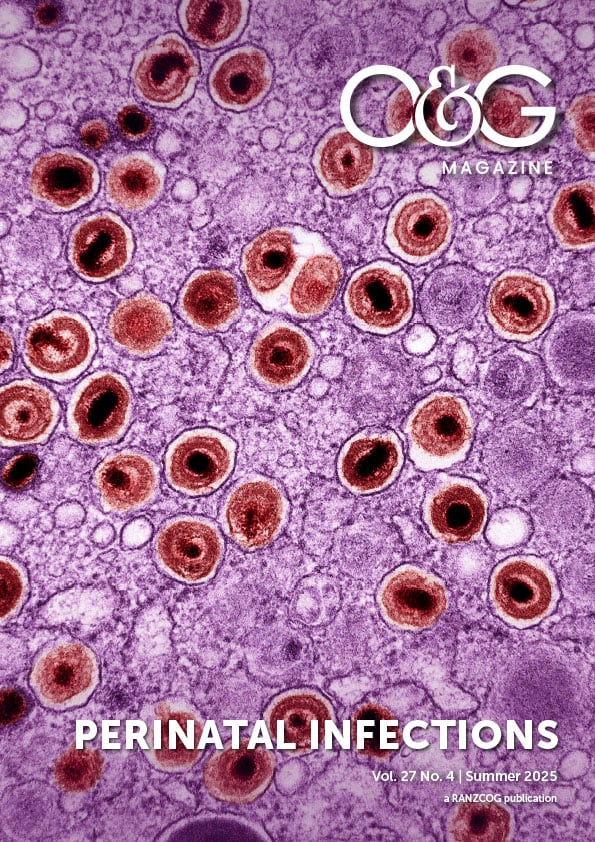
Pregnancy is often described as a time of glow and anticipation. Yet for many women and their clinicians, it can be a period of heightened vigilance, where exposure to the smallest microbe can alter the course of the pregnancy. Some infections that are mild in the general population can be devastating in the perinatal period. Their subtlety is what makes them dangerous: a sore throat that turns septic, a rash that signals varicella, or a silent chlamydia infection that costs a baby’s first breath.
In this issue, we revisit the microbes we thought we’d conquered, and the ones we too easily overlook. A case of fulminant Group A Streptococcal sepsis on day seven postpartum reminds us how “mild” symptoms can progress to multi-organ failure and toxic shock.
There are articles covering common viral threats, including Varicella-zoster, influenza, COVID-19, parvo virus 19 and cytomegalovirus, highlighting prevention, case managements, and patient education.
Chronic infections like hepatitis B and C remain quietly prevalent, often demanding ongoing care post-partum. Perinatal management of vaginal thrush or bacterial vaginosis is included in this edition.
As medicine advances, so must our research, understanding and management of these invisible foes. They may be small, but in the perinatal world, they still hold enormous power.


Leave a Reply